I’m sad to say that I will no longer be travelling to Shanghai this semester. This was a really difficult choice to make and in the end the program might have been cancelled even if I decided to wait for the program’s decision because of the corona virus.
Two days ago I received a flurry of emails from TEAN, the CDC, the state department, and other sources about China being moved to a level 3 travel warning destination. I originally thought that I would just wait it out and still be able to go to Shanghai. There is a lot of sinophobia and exaggeration about China’s conditions in the news all of the time and most of the people who were reported to have corona virus were older and/or had pre-existing health conditions. However, after emailing the Gilman scholarship program, I realized they would pull $5,000 of my funding if I decided to continue with my program in Shanghai. Additionally, TEAN offered other options to switch to the Korea or Vietnam program.
Later that night, after looking at updated news and recent statistics about the spread of the virus, I talked with my family and friends about my options. Many encouraged me to wait it out because they know how much this trip meant to me and how long I have been planning it out. Others were scared about how contagious the virus seems to be and cautioned me to be wary and just switch to another program. I really wanted to go with my heart and wait it out, but then the reported number of people who were infected in mainland China increased drastically and TEAN said there were only 10 spots in the South Korea program.
I ultimately made the call to switch to the South Korea program because I know this is the only semester I can study abroad and I am hoping that I’ll be able to visit China once the corona virus situation stabilizes and the US decreases down their travel restrictions.
people in the chinese diaspora are not the main victims of racist reactions to the coronavirus, the people who will suffer the most are those in china whose local traditions, culture, unity, and sovereignty are being attacked by westerners who dont give a shit if they live or die— happy year of the rat (@southofthelake_) January 29, 2020
I know that this situation is much bigger than myself. I am keeping the people of Wuhan in my thoughts and I am hoping the corona virus is contained and that people stay healthy and safe everywhere. My sadness about not being able to go to China is compounded by the fact that I see a lot of people from my hometown and elsewhere posting sinophobic and racist memes/jokes/news/etc. Being part of the Chinese diaspora does not excuse people from making these comments and it is important to interrogate the racism and unequal power dynamics that these comments come from. I’ve taken a break from Twitter because seeing all of these comments hurts more.
I had thought that this semester would be a time for me to do a full birth family search, get closer to my roots, and learn about the place I was born in. I wanted to learn more about the Chinese diaspora and speak with other Chinese students about their perceptions on adoption, ABCs, and global families. I wanted to immerse myself in the culture of Shanghai and improve my Mandarin so that I would be able to better communicate with Chinese Americans once I returned home. Some may see these as surface level parts of my identity, but as I’ve progressed through college, I’ve realized how integral a full understanding of my own identity is in being a better ally, advocate, and global citizen.
There is a lot to process in this switch and it is a stressful time figuring out my financial situation, new Visa application, and course registration. I know that I am so privileged to have the opportunity to travel abroad. I know that in 5 years this may just be a blip on the radar. I know that I will still grow and learn and meet amazing people in Seoul, but my heart will be in Shanghai.
During the Fall semester of 2019, I took a class on Young Adult Literature with a focus on girlhoods. For my final project I decided to create an art piece reflecting on my experiences as an adoptee. I wished that I had more books written by adoptees for adoptees in my youth. I referenced photos from my childhood and the journal that my mom kept while she was in the process of adopting me and my sister.
1
2
3
4
5
6
7
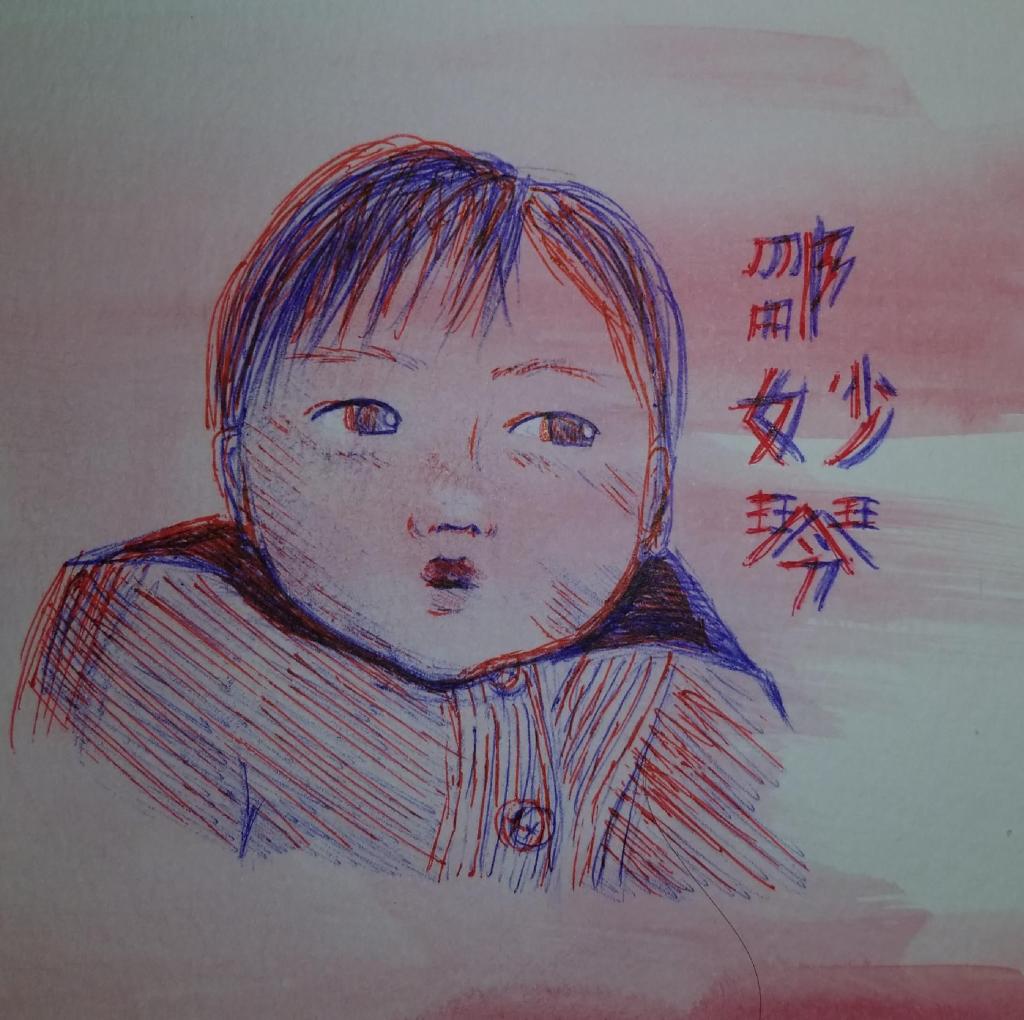
邵妙琴 (Shào Miào Qín): A New Name
This is the name I was given at the ShaoYang City Social Welfare Institute. Shaoyang is the city I lived in and the surname I was given. 妙琴 roughly translates to “beautiful instrument.” I wonder if my parents named me before they gave me away. I wonder why my caretakers at the orphanage chose this name for me. My Chinese name is now my second middle name. I still identify with my Chinese surname, but I wonder if I have the right to. I don’t have many memories of my birthplace. Will going back to China fix that? No. But I want to know more.
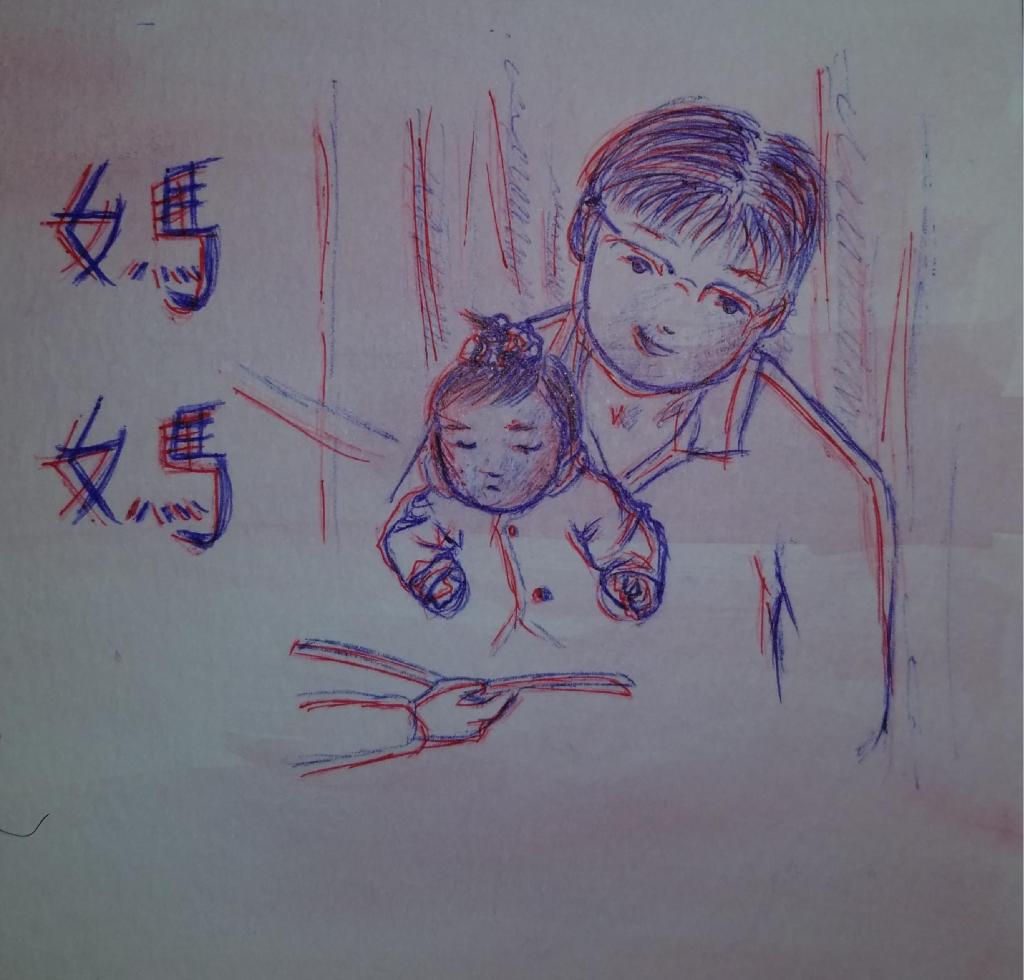
妈妈 (Māmā): A New Relationship
I don’t have any memories of when I initially met my mom. But I know that I’m very grateful for her now. Although we had a lot of problems when I was younger, she is still my family. Being an adoptee means that you may not know any blood relations, so those biological ties don’t limit who you call family. I get to choose who I let into my life and that realization has been revolutionary. I’ve had a lot of important people in my life and many of them have been mother-figures in different ways. My third-grade teacher who helped me love reading. My friend’s mom who always let me eat dinner with them. My high school English teacher who let me stay in her classroom while my mom was working. The list goes on. Not everyone has a nuclear family, but that doesn’t mean your chosen family isn’t just as valuable.
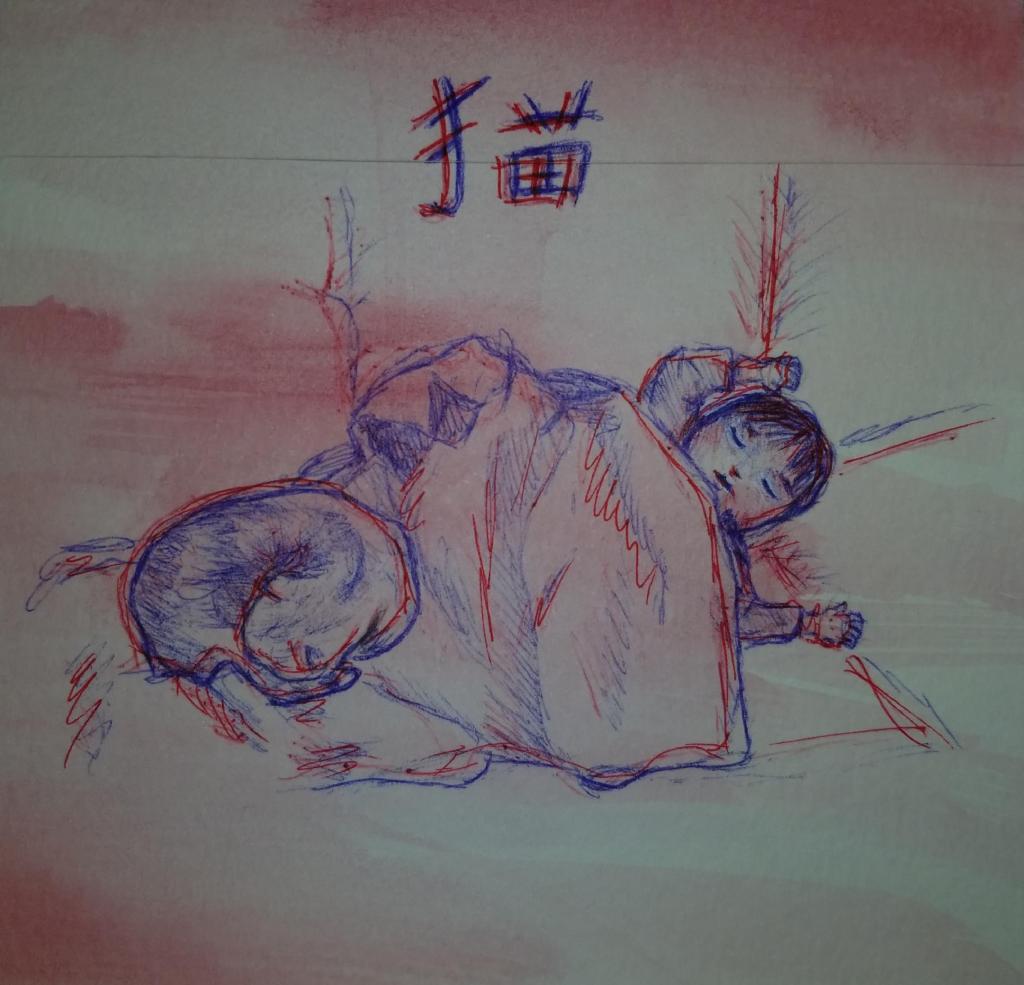
猫 (Māo): Cat
When my mom adopted me, she thought that the 妙 (Miào) part of my name was funny because she had so many cats. I had never seen domesticated animals before, so I cried and cried when I saw Simon, the orange tabby cat. He didn’t care though. He just stared at me while I screamed at him at the range only toddlers can hit. But I grew to love him. He lived until he was 20. I grew up with him. He was there when I came back from my lead poisoning treatments when I came to the states, when I graduated middle school, and when I just wanted to lay on him like a pillow. But change is inevitable. You miss the people and things and pets who used to be in your life. And that’s okay.
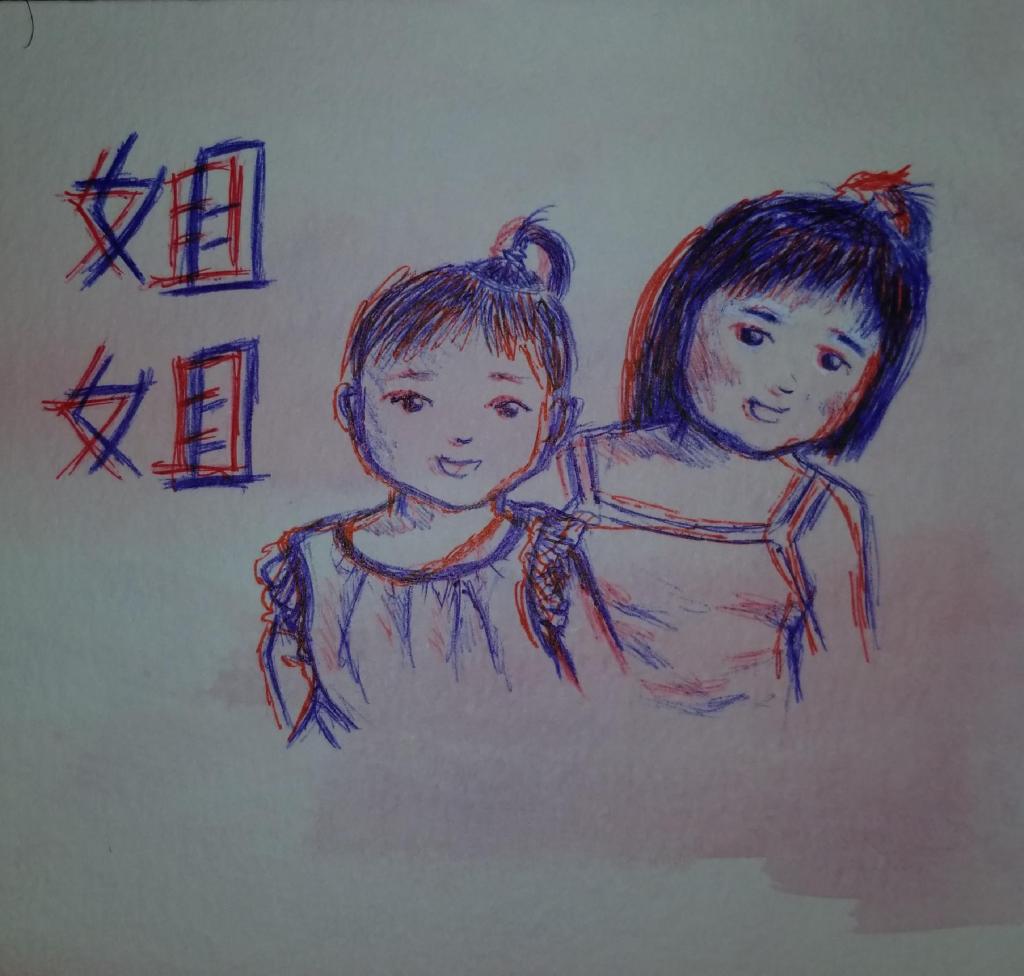
姐姐 (Jiějiě): Older sister
When my sister came to my mom’s hotel room in China, she cried for hours banging on the door and crying for the nanny who had taken care of her at the orphanage. There’s inherent trauma in being adopted. You’re constantly being separated from the people who you thought would take care of you. Who you thought would stay in your life. Who you trusted. And it’s hard. It’s okay to be sad. It’s okay to talk about the hard things that many people gloss over when it comes to adoption. Your adoptive family isn’t perfect. I’m sorry I was mean to my sister when I was adopted. I’m sorry I wasn’t always there for her. I’m trying my best now and I know that doesn’t make up for the past, but I promise I’ll keep loving you.
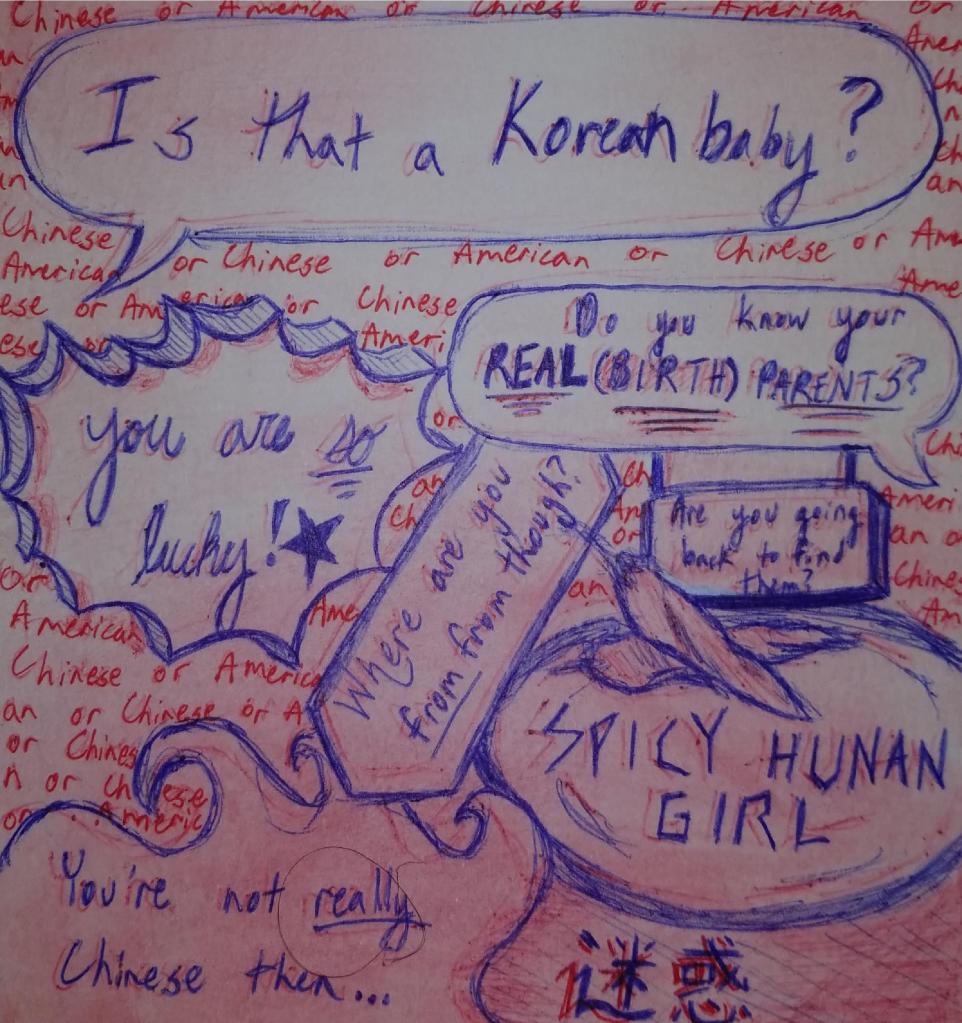
迷惑 (Míhuò): Confused; Puzzled; Baffled
There will be a lot of questions when you have a child in your life. Adoption complicates it a little more. I wish that my mom had thought more about what it meant to adopt internationally and the implications of a transracial family. I wish I had more resources when I was younger to learn about Chinese culture or had money to do a birth family search. I wish I had an older transnational adoptee to talk to. I wish people weren’t discriminatory and laws weren’t racist/xenophobic and people wouldn’t keep asking me questions I don’t have answers to. It’s not that I’m ungrateful, but I would have avoided so much pain and confusion if things were different.
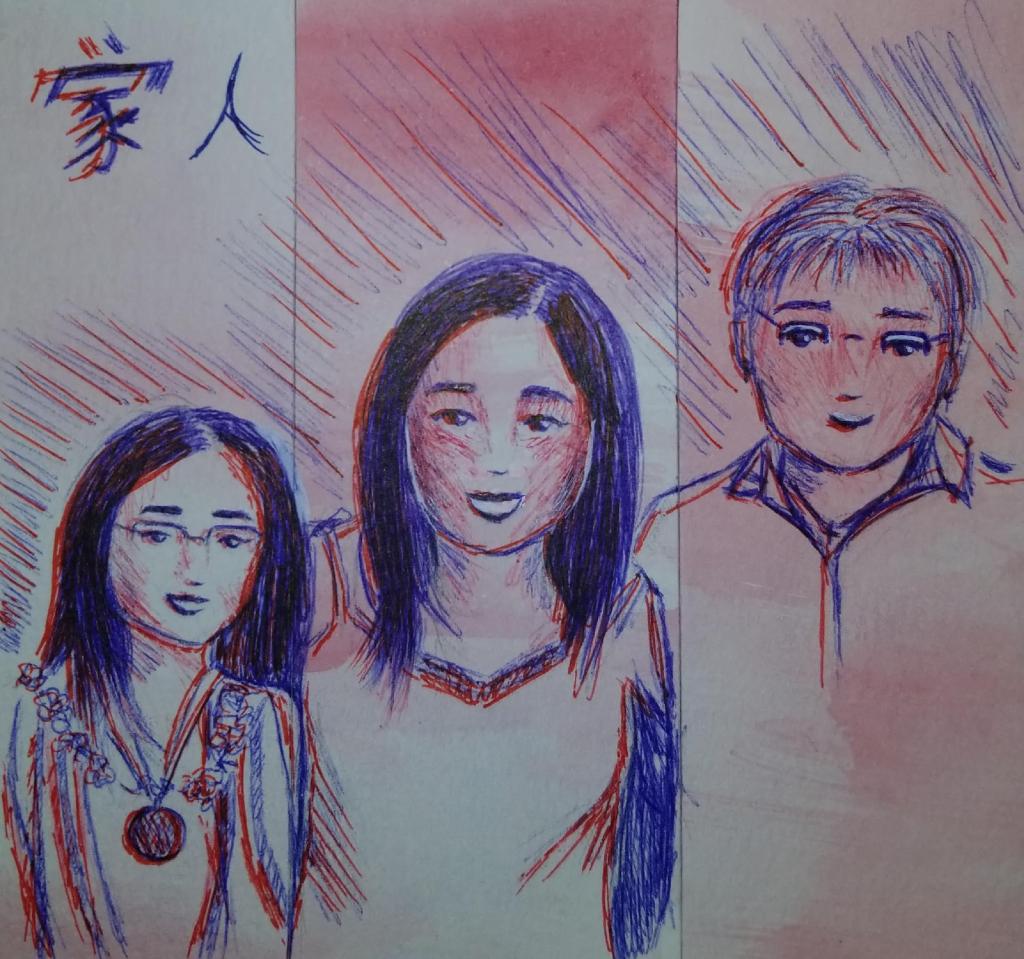
家人 (Jiārén): Family
It’s complicated. There is no right way to have a family and nobody has a perfect family. You’ll grow up learning how to make your own family comprised of friends, teachers, and so many more wonderful people. I wish I had more photos with my mom. I wish I had more photos of when my sister and I were younger. But that’s okay. I’m working through it. Although there are regrets and wishes, I’m coming to terms with what I have now and what I can do next.
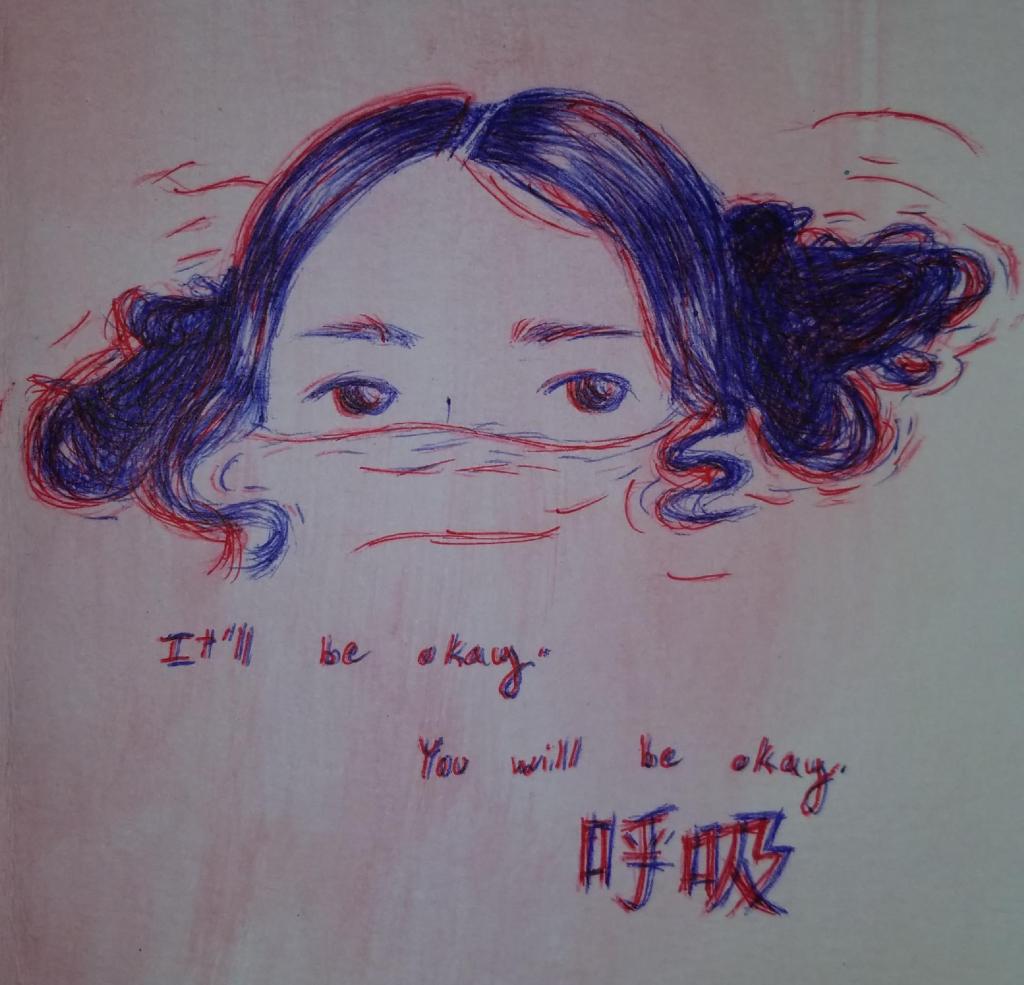
呼吸 (Hūxī): Breathe
Put your health and well-being first. Don’t get caught up in the large-scale problems of the world all of the time or you’ll forget to take care of yourself. Do things that make you happy. Journal. Paint. Write papers about topics you care about. Don’t feel pressure to conform to any expectations because who you are right now is enough. Keep learning. Find time to be with friends, even if you’re calling and it’s silent on both ends of the phone. Remember that people love you and that you are worthy of having your needs met. It’ll be okay. You will be okay.
Larger Picture Questions:
During my presentation on “I Love You Like Crazy Cakes” (ILYLCC) I knew I wanted to do a project focused on adoption, but from an adoptee’s perspective. Growing up I never read any books written by people who were also adopted; the authors were either a parent of adoptees or had no personal ties to adoption.
The plot of ILYLCC is linear and simple. The mom wants to adopt a baby from China, the baby and mom have an instant connection, and the baby is supposedly happy in the US. I wanted to complicate this narrative. There are a lot of mixed feelings that adoptees experience as they grow up and as a transracial, transnational adoptee myself I thought it was time for me to share my own experiences.
Once the Once Child Policy was enforced in 1980, many children were given up for adoption or abandoned. The population control police would fine families if they violated the restrictions, although there were exceptions for more rural areas or if the first child was a daughter. I watched One Child Nation directed by Nanfu Wang and Jialing Zhang, both of whom were born while the policy was in effect, but didn’t realize the repercussions until they were adults. The documentary mentioned the province that I was born in and goes through how child trafficking, abandonment, abortions, and/or not documenting new babies were all decisions families had to make at the time. Forced sterilizations were also common if a woman already had children. Nearly 120,000 children were adopted by international parents and the peak wave of abandonment occurred in the 1990s.
At the same time, America was having an increase in international adoptions. From the 1950s to the 1960s, the Civil Rights Movement was building up and interracial domestic adoption was a contested topic. Then the International Social Service-USA was created and adoption from China, Vietnam, and South Korea boomed, particularly for white adoptive parents. The Americanization of adopted Asian babies was pushed by the government and local media. This helped assuage the fears of some Americans; if these babies born in Communist/foreign/threatening countries could be assimilated into American culture, then there must be something positive about international adoption.
The white savior narrative is something that I wanted to challenge with this project. I want to tell it from my perspective and not allow the romanticization of adoption to be at the forefront. A transracial adoptee I follow on Instagram (@adopteelilly) said: “I can love my adoptive family and be thankful for them while not being grateful for the circumstances that brought us together.” This resonated with me and I wanted to explore my own thoughts and feelings about the situation.
I wanted to resist the common tropes of a loving birth mother, the objectification of the adoptee, predestination, and glossing over the initial adoption adjustment. It was hard because a lot of my illustrations are based on pictures my mom or the orphanage took, which are mostly trying to depict me and my sister as “good kids.” But I still feel like I fall into the Cult of Motherhood trope from the 1850s with the idea of mothers being the keeper of wisdom, bringer of beauty, and emotional heart of the family isn’t exactly how I see my mom. But she also was the only guardian I’ve ever had.
In the children’s literature we’ve gone over in class, I have connected most to the “problem novel,” where characters are often from lower-class families and the authors have a more realistic depiction of a child/teen’s life. Racism, identity crises, suicide, and other heavy topics are struggles that kids should have space to talk about. This only really became popular during the 70s and 80s, but I think it’s important to start talking about these topics as soon as children begin questioning them, if not before. Understanding that the world isn’t a fair place and that sometimes you don’t get what you deserve is hard to take. But that doesn’t mean there aren’t people you love you and resources for you to try to live your best life regardless. Question the world you live in. Resist oppressive structures. Take time for yourself. Take time for your loved ones.
Reflection
I created this piece to reflect on my adoption and what I wish I had been told when I was younger. I wanted to complicate the narrative of a smooth and idyllic interracial adoptive family. Although many children’s books around adoption normalize varying family structures, it is hard having two transnational adoptees come to live with an older single mother. Sharing my narrative is something I haven’t felt comfortable doing ever and having this outlet to express what I’ve been through and the struggles of my life as an adoptee was very therapeutic.
I do wish I had more detailed journals of my mom’s experiences going through my sister’s adoption. Reading her log on the events leading up to my adoption and the photos she included made me miss home a lot more than I imagined. But I wonder how her thought-process evolved when she went to adopt my sister. My sister was adopted right after 9/11 happened and she talks about how it was a struggle going through airport security with a “foreign” child. These small illustrations don’t connect directly to the Civil Rights Movement in America, the post 9/11 criminalization of Muslim Americans or the Asian American activists that I look up to. But they aren’t separated from that either. Identity is inherently political.
I would add additional panels about how receiving a more holistic education around American history increased my drive to participate in advocacy work and how it helped shape my current understanding of being an Asian American, a Chinese adoptee, and a documented citizen of the US. I’d want to add more about learning about how international adoption fits into the larger picture of population control in China and why America’s international adoption skyrocketed.
I also cut a few pages wrong, so I taped them back together, but I feel like visually it’s okay. Art is something that I have always enjoyed and being able to reflect on old photos was really therapeutic in some ways. Overall, I’m satisfied with this piece, but I know that I’ll keep adding to it and going back to it. My thoughts on adoption have changed so much over the years and I know they will continue to evolve. Self-reflection never stops.
大家好! Thanks for visiting my page. This will be a place for me to reflect on my experiences as a transnational Chinese adoptee while I study abroad in Shanghai. I will be at Fudan University until June and hope you will stay tuned to hear about my adventures.
 邵的旅程
邵的旅程 
You must be logged in to post a comment.